
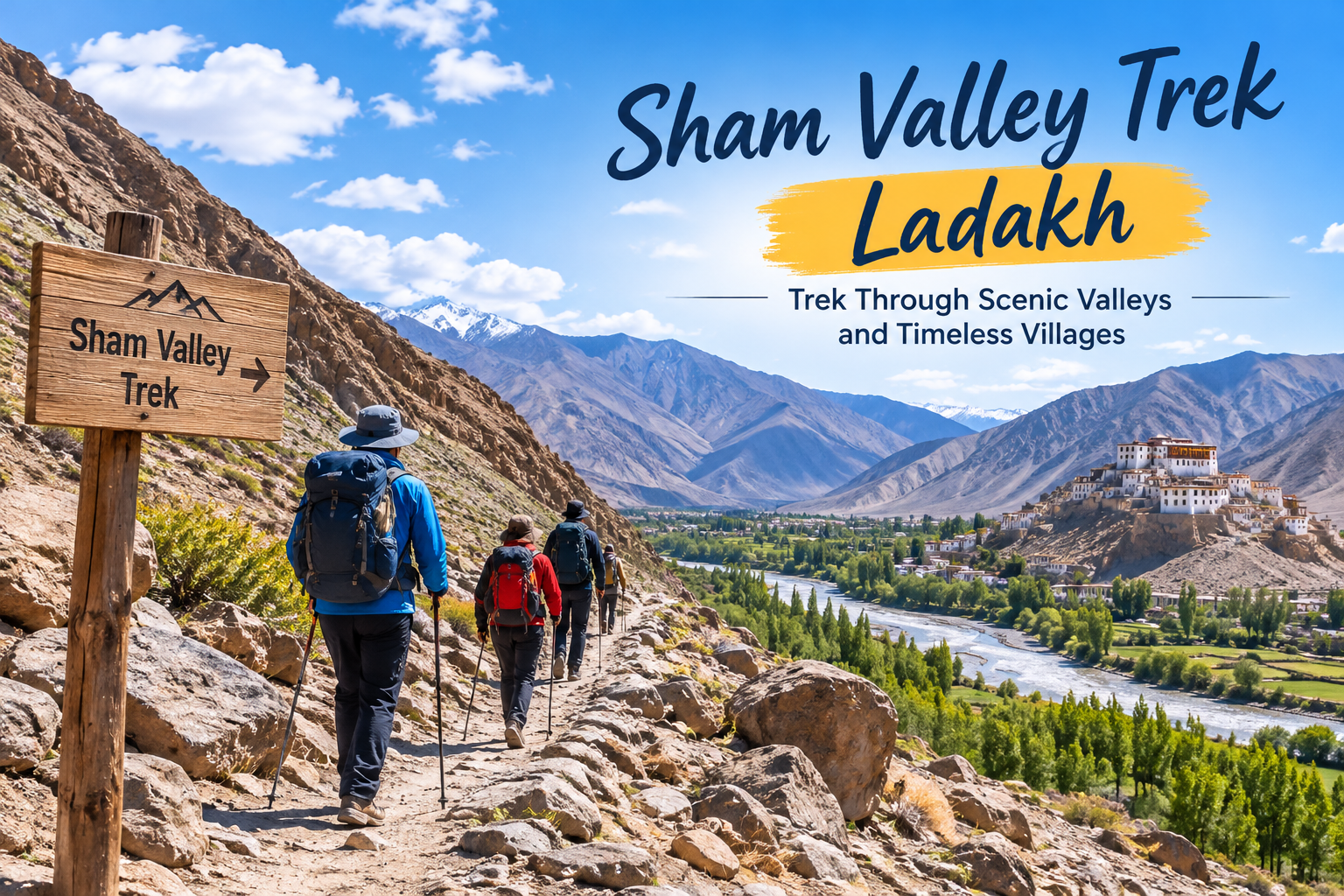
The Sham Valley trek is one of the easiest hiking routes in Ladakh. It’s popular with travellers who want to see mountain scenery without taking on a tough expedition. Often called the “Baby Trek,” it goes through traditional villages, monasteries, high-altitude landscapes, and peaceful valleys. So, how many days should you plan for? That depends on your pace, how well you adjust to the altitude, your interests, and how comfortable you want to be.
Understanding the Route
The Sham Valley trek in Ladakh follows village trails west of Leh. The route has moderate walking distances, gentle climbs, and well-marked paths. Even though it is easier than many other treks in Ladakh, it is still at high altitude, so getting used to the elevation is important.
The Sham Valley area in Ladakh is also rich in culture. Villages like Likir, Yangthang, Hemis Shukpachan, and Temisgam give you a look at traditional Ladakhi life. Monasteries and old buildings add to the history. The whole Sham Valley is great for travellers who want to enjoy both nature and local culture.
3-Day Route: The Faster Option
A three-day route is perfect if you have a busy schedule but still want to enjoy a real village trek. Most Sham Valley trek itineraries start near Likir and head to Yangthang on the first day. On the second day, you walk to Hemis Shukpachan, and on the third day, you finish at Temisgam or another endpoint.
The exact route can change depending on the tour operator and the season, but the three-day plan covers the main highlights in a short time. It’s a good choice if you want to fit the trek in with other sightseeing around Leh, though the tight schedule means there is less time for breaks or surprises.
5-Day Route: The Slower Option
A five-day route spreads out the walking, so it’s better if you like to take things slow. You won’t have to rush between villages and can spend more time exploring, taking photos, and enjoying the peaceful side of the valley.
A longer Sham Valley trek itinerary often means shorter walks each day and more stops in different villages. Depending on your route, you might also get to visit monasteries, meet local people, and stay in homestays.
The slower pace is good for people who are new to high-altitude trekking. Even though the route is not too hard, walking at this height can feel tougher than at sea level. Having extra days makes the trek more comfortable and gives you more flexibility.
Also Read: Explore the Sham Valley Trek: One of the Best Beginner-Friendly Treks in Ladakh
3-Day vs 5-Day: Which Should You Choose?
The main difference is not just how many days you spend, but how you experience the area. The three-day route is efficient and works well if you only have a short time in Ladakh.
The five-day route lets you really soak in the experience. You have more time to enjoy the villages and scenery without feeling rushed.
Your choice should also depend on acclimatisation. Spending sufficient time in Leh before beginning the trek is important regardless of duration. A well-paced trip is preferable to covering too much ground too quickly.
Route Planning and Costs
Looking at a Sham Valley trek map before you go can help you see the order of villages, passes, and walking sections. Maps also show where you can reach the road, which is helpful if you need to change your plans.
The Sham Valley trek cost depends on how long you go, where you stay, meals, transport, guide services, and group size. A five-day trip usually costs more than a three-day one because you need more nights, meals, and support. Prices can also change depending on the season.
If you’re looking into a Leh trek, check what is included instead of just looking at the main price. Things like transport, permits, meals, and support services can really affect the overall value.
Best Time to Trek
The main trekking season is during the warmer months, when the routes are easier to access and it’s simpler to arrange village stays. Spring and autumn also have nice weather and clear views.
Before you start trekking in Leh Ladakh, check the latest trail conditions and give yourself time to get used to the altitude. Bring layered clothes, sun protection, comfortable trekking shoes, and plenty of water.
What Makes Sham Valley Worth Visiting?
One of the best things about this route is that it’s both easy to reach and feels authentic. Unlike tougher Himalayan treks, you don’t need to walk for days to see beautiful scenery.
The sham valley Leh experience is about more than reaching a destination. Walking between villages lets you observe fields, traditional homes, prayer flags, mountain streams and monasteries at a slower pace. For many visitors, sham valley Leh becomes memorable because the journey connects small settlements rather than focusing only on a final viewpoint.
The Sham Valley trek is a great choice if you want to explore Ladakh on foot without too much physical effort. It’s also a good way to get started before trying a harder Leh trek later on.
Why Choose Dream Land?
We at Dream Land, see how much good planning can improve a Ladakh trek. We help travellers learn about the route, pick the right trip length, and sort out details like where to stay, how to get around, and how to adjust to the altitude. If you’re thinking about trekking in Leh Ladakh, we aim to make your journey comfortable and well-organised while keeping its local charm. Whether you want a short three-day adventure or a relaxed five-day trip, Dream Land can help plan your trek to fit your schedule and interests.
Conclusion
Deciding between three or five days really depends on how you want to experience the valley. The shorter route is efficient and good for tight schedules, while the longer one gives you more time to enjoy villages, culture, and a slower pace.
Look over the Sham Valley trek map, check what’s included, and think about the cost before you decide. If you’re planning a Sham Valley trek in Ladakh, make sure you have enough time to adjust to the altitude and keep your plans flexible. With good planning, this trek is a great way to experience Ladakh’s scenery and village life.
Check Out Our Most Popular Treks – Markha Valley Trek | Phyang to Hunder Trek (Nubra Valley) | Spituk to Matho Trek | Rumbak valley Trek | Lamayuru to Hemis Monastry Trek | Lamayuru to Darcha Trek | Rumtse to Tsomoriri Trek | Hemis to Tsomoriri Trek | Padum To Lamayuru Trek | Kibber Tsomoriri & Rumtse Trek | Jhunglam Trekking