
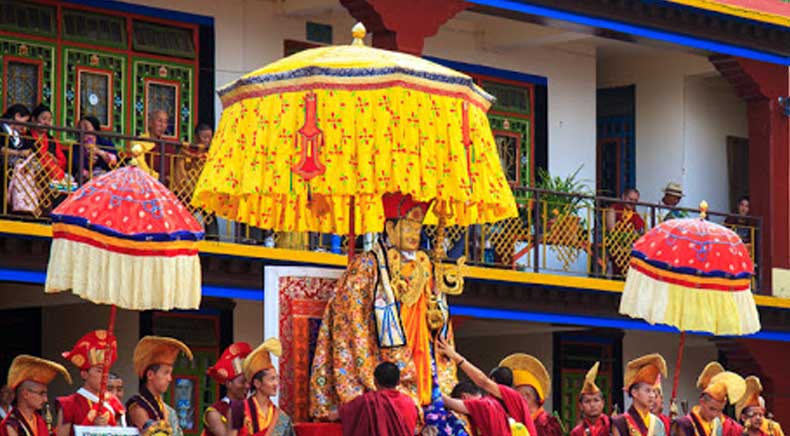
Located high up in the Himalayas, Ladakh is known for its stark beauty and serene monasteries. While its beauty is certainly an important part of its charm, there is a deep spirituality that permeates this region. One of the most important, though little-known, festivals is that of Saka Dawa, a time that turns this region into a place of deep spirituality and cultural richness.
Unlike other festivals, the Saka Dawa festival is celebrated for a month, and this is no festival but a spiritual experience that is undertaken with commitment and discipline by the people of Ladakh.
What is Saka Dawa?
Saka Dawa is one of the holiest periods for Tibetan Buddhists. It is observed to commemorate three important events that happened in the life of Lord Buddha: his birth, attainment of enlightenment, and nirvana (death). It is believed that all three happened on the full moon day of this holy month.
This is why this month is extremely important for Buddhists. It is believed that the results of both good and bad deeds are amplified during this time. This is why people make a conscious effort to practice kindness, pray, and refrain from doing bad things.
The most important day for Tibetan Buddhists is the full moon, also known as Buddha Purnima, observed in the region of Ladakh.
When is Saka Dawa Celebrated?
The timing of Saka Dawa is determined by the Tibetan lunar calendar. The timing usually falls between the months of May and June, and this is very close to the Indian celebrations of Buddha Purnima.
The entire month of Saka Dawa is celebrated with great devotion, and the full moon day is the highlight of the month, with all the monasteries and public areas coming alive with the celebrations.
For the traveller, the time is an opportunity to witness the spiritual high of Ladakh.
How is the Saka Dawa Festival Observed?
Saka dawa festival in Ladakh is characterised by simplicity and genuine intent rather than display and pomp.
People start the day early and visit monasteries to offer prayers. Butter lamps are lit during the festival to symbolise the removal of ignorance.
During the festival days, people prefer to eat vegetarian food. Some people even avoid drinking and harming any living being during this period. Giving and doing charity are common practices during the festival days.
Another important practice during the festival days is circumambulation of the monastery, called ‘kora’. During kora, people walk around the monastery in a clockwise direction and turn the prayer wheel while reciting mantras.
Also Read: 27 Famous Buddhist Monasteries in Ladakh
Monasteries and Spiritual Gatherings
In Ladakh, monasteries are a central part of the celebration during Saka Dawa. Monasteries such as Thiksey, Hemis, and Diskit are important venues during this time.
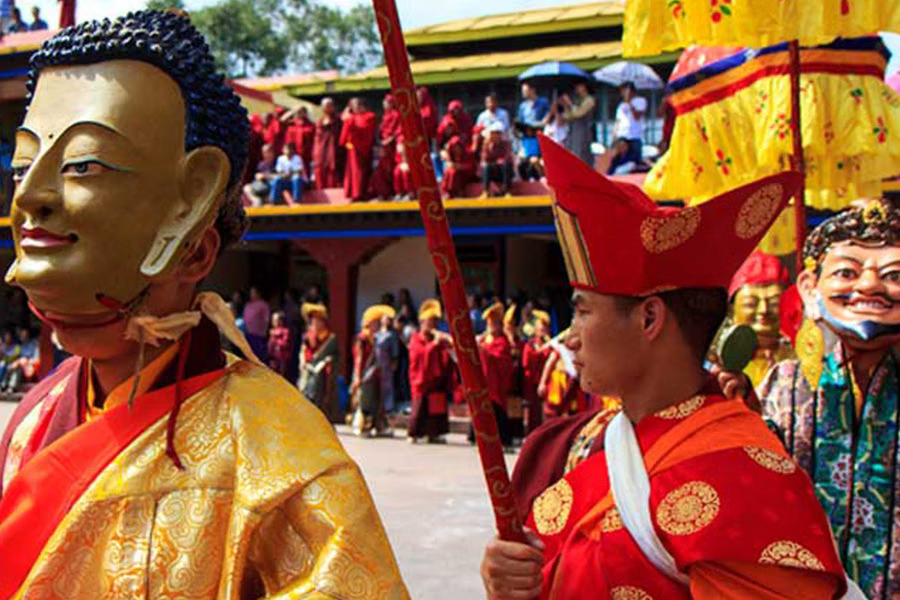
Monks perform special rituals, chant mantras, and conduct prayer meetings. The environment is peaceful and powerful, with a sense of rhythm from chanting and soft lighting from butter lamps.
While some festivals are noisy and crowded, the saka dawa festival promises a different experience altogether. One can find oneself getting immersed in the peaceful surroundings.
Cultural Significance of Saka Dawa
Apart from its religious value, Saka Dawa also represents the core values of Ladakhi culture, such as compassion, mindfulness, and living in harmony with nature.
Saka Dawa also helps individuals reflect on their actions and encourages them to think positively and let go of negative thoughts. This value for living ethically is part of Ladakhis’ daily lives.
For travelers, participating in saka dawa month gives them a glimpse into a different side of Ladakh, one that goes beyond its tourist attractions and helps them understand its spiritual essence.
What Travellers Should Know
If you plan on visiting Ladakh during the Saka Dawa festival, especially while exploring some of the best treks in Ladakh, there are a few things you should be aware of.
Firstly, be considerate of local customs. Monasteries are sacred places, so dress appropriately and be silent when required.
Secondly, be considerate of rituals that might be taking place. Photographs might not be allowed, especially during prayer time.
Lastly, be patient with the locals. The saka dawa festival is not about entertainment; it’s about reflection. If you take your time, your experience will be much more enriching.
Experiencing Buddha Purnima in Ladakh
The highlight of this saka dawa month is undoubtedly the full moon day, which is celebrated as Buddha Purnima in Ladakh.
This day is marked with more visitors at monasteries. Rituals are conducted on this day, and the feeling of oneness among people can be experienced. People gather, pray, and seek enlightenment on Buddha’s teachings.
For visitors, witnessing this day can be an emotionally moving experience. The combination of spirituality and communal gatherings can be experienced on this day.
Also Read: Ladakh Culture and Tradition
Responsible Travel with Dream Land
For those who wish to explore Ladakh during this sacred period, it can be done with careful planning. Many travel websites, such as Dream Land, focus on providing experiences that allow visitors to explore Ladakh while being respectful of its culture and traditions.
Rather than rushing through popular tourist attractions, such approaches encourage visitors to explore Ladakh more meaningfully. During the Saka Dawa festival, it is especially important for visitors to be more mindful of their actions.
By choosing routes and itineraries that allow them to align with local culture, visitors can experience the essence of Saka Dawa without disrupting its sanctity.
Conclusion
In a world where speed and movement are the norm and the typical tourist experience is one of checklists and rushing from place to place, Saka Dawa represents a welcome respite and a chance to look inward and consider the deeper meaning of life.
The Saka Dawa festival is not a festival of grand spectacle and display but rather one of inner spirit and intent, encouraging people to look inward and consider the value of compassion and mindfulness.
Not only is the Saka Dawa festival a cultural experience, but it is a chance to see a way of life that is deeply at peace with the world and the meaning of life.
For those who are willing to look beyond the surface level of things, the Saka Dawa festival represents a deeper and more profound side of Ladakh and life.
Check Out Our Most Popular Treks – Markha Valley Trek | Phyang to Hunder Trek (Nubra Valley) | Spituk to Matho Trek | Rumbak valley Trek | Lamayuru to Hemis Monastry Trek | Lamayuru to Darcha Trek | Rumtse to Tsomoriri Trek | Hemis to Tsomoriri Trek | Padum To Lamayuru Trek | Kibber Tsomoriri & Rumtse Trek | Jhunglam Trekking