
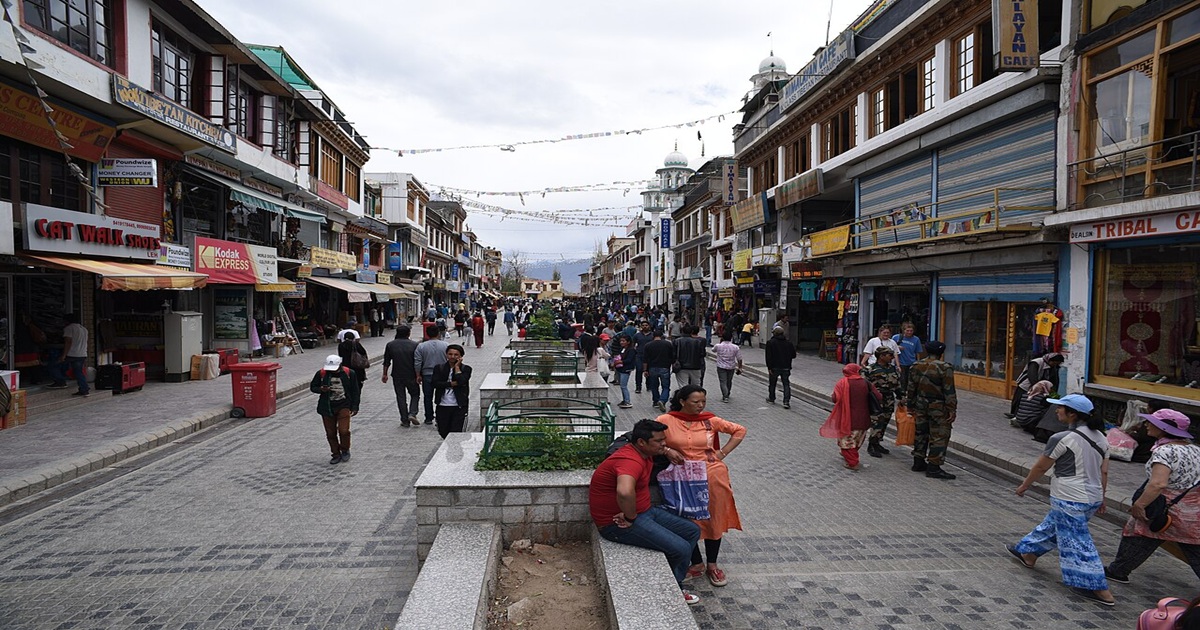
Situated deep within the Himalayas, Leh is not just a base for visiting monasteries and crossing numerous passes. At its heart lies the lively Leh market, a place where culture thrives, business is conducted, and conversations collide. A visit to Leh, be it a short stopover or a longer visit, can be transformed if you get to understand the Leh main market.
Everything is covered in this guide, including where to shop, when to go, and how market life ties in nicely with your adventure in Ladakh.
Understanding the Pulse of the Leh Ladakh Market
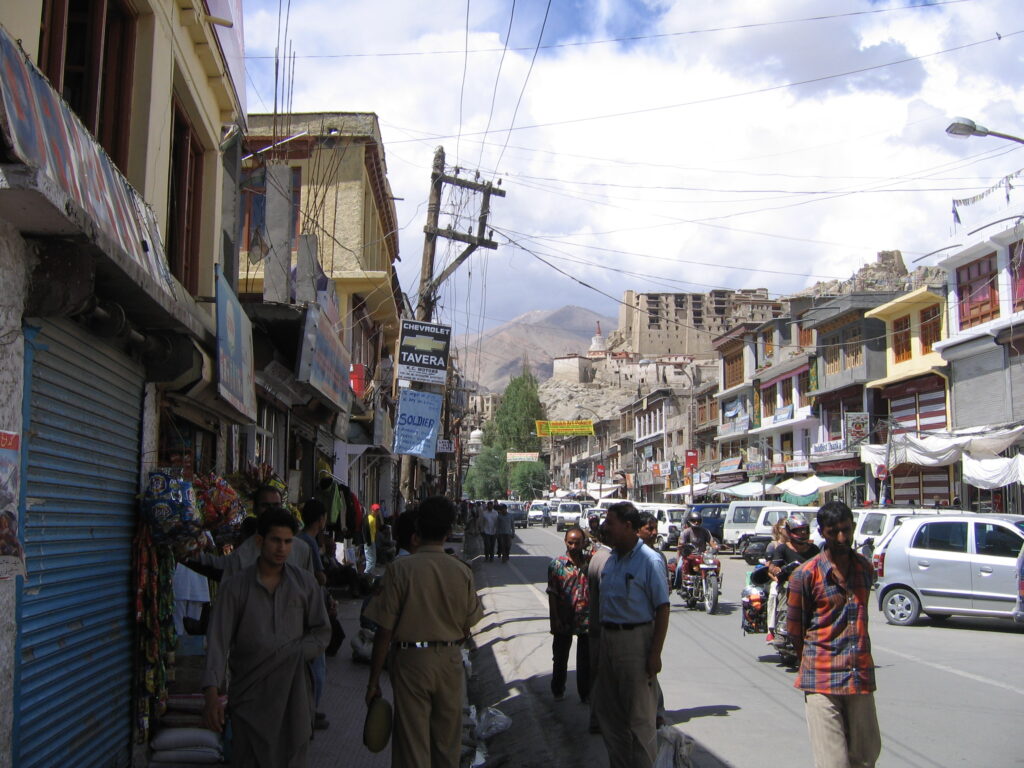
The market in Leh Ladakh is small, pedestrian-friendly, and delightfully chaotic. Shopkeepers set up prayer flags and vibrant scarves during the day. Cafés softly glow in the evening as tourists haggle for souvenirs.
This market feels more intimate than bazaars in large cities. Vendors are able to recall faces. Butter tea is offered by store owners. You participate rather than merely peruse.
Because locals purchase everyday necessities there together with tourists looking for souvenirs, locals frequently refer to it as the Leh local market. That blend gives the area its authentic charm.
Also Read: Exploring the Old Town of Leh
What Makes Leh Market Shopping Special?
Leh market shopping isn’t about crossing things off a list. It’s about apricots dried in the mountain sun, silver moulded by hand, and tales embroidered into wool.
Well-liked discoveries consist of:
- Shawls made of pashmina and wool stockings
- Turquoise and coral jewellery from Tibet
- Hand-carved objects made of wood
- Herbal teas from the area and organic apricot oil
Although prices are typically reasonable, haggling is a part of the experience. Instead of viewing it as a negotiation, consider it a friendly discussion.
Be prepared with cash if you plan to make purchases in Leh Ladakh. There are ATMs, although they can be unreliable in busy times.
Best Time to Explore the Leh Main Market
From May to September, when the roads open and tourists flood in, the market comes to life. The quiet mornings are perfect for perusing. While the afternoons are busy, the evenings bring a more laid-back energy with the scents of street cuisine filling the air.
Try going twice: once throughout the day for concentrated shopping and once after dusk for ambience. The Himalayan twilight completely changes the mood of the same roadway.
How the Market Fits Into Your Ladakh Itinerary
Most people slot the market between sightseeing expeditions. After a visit to the Khardung La Pass or after returning from Pangong Lake, this market serves as an easy reintroduction to normal town life.
It’s also the perfect place to come and recover from mountaineering in Ladakh or from long drives through the barren valleys. A warm café, a quiet bookshop, and suddenly the altitude is not so bad.
For those travellers seeking a mix of culture and thrills in the evening, morning hours can be used for visiting monasteries, afternoons for cafes, and the evenings for the Leh Market.
Food Stops and Café Culture
Cosy cafés with momos, thukpa, and surprisingly fine espresso may be found tucked away between tourist shops. Local products, such as apricots and barley are used in several locations.
Take frequent pauses. Ladakh’s cadence includes slow drinking, and altitude might catch you off guard. It becomes a memory in and of itself to sit at a window and watch people wearing shawls.
Practical Tips for First-Time Visitors
- On your first day, start out slowly. It’s important to acclimatise.
- Put on layers of clothing. Even summer evenings might feel chilly.
- Steer clear of plastic bags. Cloth totes are preferred by many store owners.
- Before taking pictures, especially of people, ask.
- For more expensive products like shawls, save your receipts.
Above everything, take your time. Patience pays well in the Leh Ladakh market.
Market Life Beyond Shopping
Many tourists are surprised by how Ladakh’s soul is reflected in the market. Weather patterns are discussed by elderly men. Smoothie bars are passed by monks. Kids ride bicycles past crowds.
It’s a living postcard that demonstrates how customs can coexist with tourism without becoming obsolete.
When visitors travel to Ladakh in search of adventure, they frequently find that their most memorable experiences are the peaceful times they spend exploring the Leh local market.
Also Read: 27 Famous Buddhist Monasteries in Ladakh for a Spiritual Journey
Dream Land: A Local Perspective on Exploring Ladakh
We at Dream Land often see tourists uncovering the essence of the area through small moments, such as an impromptu tea break, a peaceful visit to a monastery, or an evening stroll through the main market in Leh. Our strategy has always been straightforward: provide tourists with more than just maps and checklists to help them understand Ladakh. Our goal is to make travel feel organic rather than hurried, from sharing local traditions and secret locations to outlining seasonal road conditions. Having grounded, on-the-ground supervision may make market walks and mountain drives more enjoyable and meaningful, especially for first-time visitors.
Conclusion
Leh’s market is more than just a place to shop. It’s where mountains and memories come together. Everywhere you look, you can see something human, from artisan jewellery to peaceful cafés, from bustling negotiating to peaceful strolls at twilight.
The market in Leh, Ladakh, is a perfect way to combine road excursions with leisurely evenings or trekking in Ladakh with visits to monasteries.
Walk carefully, then. Speak with new people. Drink local tea. Make your shopping at leh Ladakh a narrative you take home rather than just a chore.
Because the little streets of the local market in Leh frequently have the loudest emotional resonance long after the peaks are no longer visible.
FAQs
What is famous in Leh for shopping items?
Leh is famous for Pashmina shawls, Tibetan handicrafts, prayer flags, silver jewelry, apricot products, and traditional Ladakhi souvenirs.
Is Leh Market closed on Sunday?
Most shops in Leh Market remain open during the tourist season, but some stores may operate with reduced hours on Sundays.
What are the opening hours of Leh Market in Leh city?
Leh Market is generally open from 10:00 AM to 8:00 PM, though timings may vary depending on the season and individual shops.
What to buy from Leh Market?
Popular items include Pashmina products, Buddhist artifacts, handmade carpets, woolen clothing, dry fruits, local apricot products, and traditional jewelry.
Is Leh Market in Leh city open throughout the year?
Yes, Leh Market remains open throughout the year, but some shops and businesses may have limited operations during the winter season due to harsh weather conditions.
Check Out Our Most Popular Treks – Markha Valley Trek | Phyang to Hunder Trek (Nubra Valley) | Spituk to Matho Trek | Rumbak valley Trek | Lamayuru to Hemis Monastry Trek | Lamayuru to Darcha Trek | Rumtse to Tsomoriri Trek | Hemis to Tsomoriri Trek | Padum To Lamayuru Trek | Kibber Tsomoriri & Rumtse Trek | Jhunglam Trekking