
Mountain climbing is a demanding but fulfilling sport. Mountain climbing calls for physical endurance, mental toughness, and respect for the great outdoors, which is not unhealthy. Climbing icy mountain peaks, crawling across boulder outcroppings, with each climb, a climber takes something at risk. But successful mountain climbing is not solely the product of passion; it’s the product of planning, hard work, and a respect for safety protocol.
What is mountain climbing called? Known most commonly as alpinism or mountaineering, the sport of adrenaline entails mountain climbing using skill and equipment. Attracted by either the thrill of heights or the serenity of unspoiled views, mountain climbing offers a feeling of accomplishment, as well as celebrity.
What is Mountain Climbing
Essentially, mountain climbing is the activity or sport of climbing to the top of mountains. It has grown from basic expeditions into new ground to a highly disciplined sport with established methods and equipment. Mountain climbing was widespread in the 19th century, particularly in the Alpine countries of Europe, and it gave birth to so-called modern mountaineering.
Mountain climbing consists of many various forms, each needing specialised training:
- Rock climbing: Emphasis on climbing vertical rock faces with ropes and anchors.
- Ice climbing: Climbing ice slopes or ice waterfalls with special gear.
- Alpine climbing: Mountain climbing, rock, snow, and ice at high elevations.
- Trekking or hiking: Long-distance walking on mountain trails, often in preparation for tougher climbs.
Simplistically, a person who climbs mountain is called a mountaineer and is one who goes up mountains. The term is not simply one of physical strength but also incorporates patience, flexibility, and bravery.
Also Read: Snow Leopard in India – Habitat, Facts and Population
Why People Go Up Mountains
Mountaineers share the same motivating factors for going up mountains, regardless of the various reasons that people go up mountains.
To some, it’s adventure and adventure, to overcome nature’s biggest challenges and reach new heights. To some, it’s fitness and endurance, because mountaineering is a body exercise that builds cardiovascular, muscular endurance, and coordination.
Apart from physical endurance, mountain climbing also has deep psychological and emotional benefits. Solitude in high mountains provides the climber with the opportunity to be stress-free and synchronise with nature. With every success in reaching the top, there is victory, which nurtures confidence and mindset.
Exercises in Mountain Climbing
Prior to ascent, the individual will need to condition himself or herself on a specialised mountain climbing exercise program. Physiological conditioning improves performance and resistance to injury.
- Cardiovascular Conditioning: Running, swimming, bicycle riding, and climbing stairs enhance lung strength and endurance, both needed at high altitude with limited oxygen.
- Strength Training: Squats, lunges, push-ups, and planks to build leg and core strength and endurance. Shoulder and arm strength are also crucial in hauling up hillside faces.
- Flexibility and Balance: Pilates, yoga, and stretching exercises enable climbing uneven terrain with ease and safety.
Weekly Training Plan for Beginners:
- Day 1: Jogging (30 minutes) + Core strengthening
- Day 2: Leg training + Climbing stairs
- Day 3: Rest or light stretching
- Day 4: Hike or brisk walk
- Day 5: Balance exercise + Full-body exercise
- Day 6: Cycling or swimming
- Day 7: Rest
For weeks, going for regular training will toughen your body enough to endure the physical activity involved in mountain climbing.
Mountain Climbing Equipment and Apparatus
Proper selection of mountain climbing gear is just as vital as physical fitness. Proper gear will provide safety, comfort, and effectiveness to your climb.
The Must-Have Equipment:
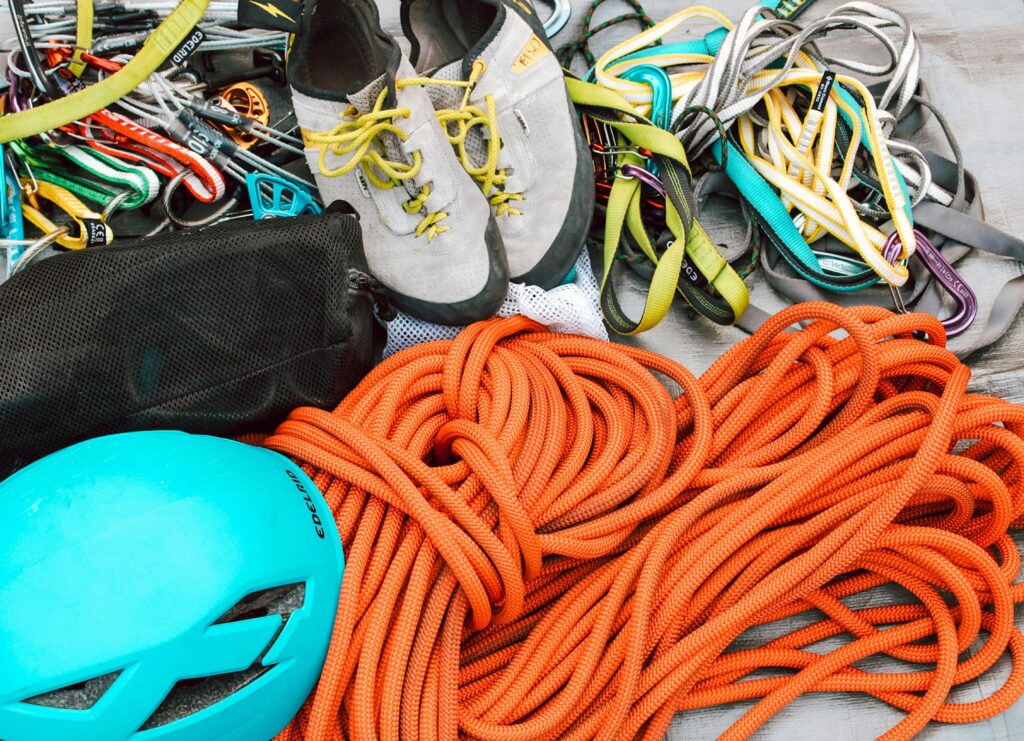
- Ropes, harnesses, and carabiners to secure the climbs
- Head helmets to protect against head trauma from falling rocks
- Belay devices to manage the rope flow
Footwear and Clothing:
- Cold-weather insulated clothing and insulated parkas
- Waterproof trekking boots and gloves for traction and warmth
- Sunglasses and hats to protect against sunburn and snow glare
High-tech Gear (for high-altitude climbing or ice climbing):
- Ice axes and crampons for snow or ice grip
- Headlamps and GPS orienteering lights
- Mountain climbing equipment selection depends on terrain, weather, and experience. New climbers should seek advice from experienced climbers or instructors before they purchase expensive gear.
Tips for Mountain Climbing Safety
- Safety is a top priority in mountain climbing. Follow these simple precautions to avoid accidents:
- Warm up and stretch regularly to avoid accidents.
- Verify the weather conditions and altitude levels before heading out.
- Employ qualified equipment and check ropes and harnesses occasionally for weakness and tears.
- Climb with senior, experienced guides or local guides who know the country.
- Carry a first aid kit, a tool of emergency communication, and sufficient food and water.
- Have basic knowledge of first aid and methods of emergency evacuation.
- Good planning and information can be the difference between a good trip and a disaster.
Also Read: Best Winter Treks in Ladakh – Easy, Tough and Short Treks
Preparing for Your First Climb
First-timer climbers’ training is physical and mental. Begin by finding out about mountains appropriate for first-timer climbers, of relatively intermediate elevation and well-sign-posted trails.
Take it light, and bring along only essentials like water packs, food, spare clothes, sun sunscreen, and navigation gear. Pack much, and you’ll be toast in no time. Above all, keep a positive attitude and remain patient; mountain climbing is all about patience and carefulness.
Dream Land: Your Gateway to the Himalayas
If you are going to embark on a lifetime of mountain climbing in Ladakh, then there are no other places that can match the grandeur of the Himalayas. Its cold deserts, snow white peaks, and ancient routes are heaven for adventure lovers.
Local Ladakh trek and mountaineering companies, such as Dream Land, guide climbers along tried and tested routes such as Stok Kangri, Kang Yatse, and Nun Kun. They are trained to offer climbers the excitement of mountaineering in Ladakh, ensure their safety and make use of the best environmental protection practices. Whether a novice or an experienced mountaineer, Ladakh’s tough but stunning climbs are an experience worth remembering.
Fun Facts and Misconceptions
Everyone believes mountain climbing is reserved for super sporty people, but actually, any person who is willing and well-trained can do it. Mountaineering is also not without risk. Although there is no way to avoid risk, safety regulations can maximally reduce the risks.
Perhaps one of the greatest achievements in the world is Sir Edmund Hillary and Tenzing Norgay’s 1953 climb of Mount Everest, and Reinhold Messner’s legendary solo climbs without the assistance of supplemental oxygen. All of these legends still inspire generations of individuals to climb into the grandeur of the mountains.
Conclusion
Mountain climbing, or mountaineering, is not a sport; it is an ordeal of ruggedness, stamina, and exploration. It tests the body to its limits and elevates the spirit, giving the climber a peerless feeling of unity with nature’s fury. In the Ladakh mountains or even in the village hill, good planning, safety precautions, and respect for the mountains are the secrets of success.
FAQs
Is mountain climbing a good workout?
Yes, it’s a great full-body exercise that strengthens, endures, and balances.
What kind of equipment is needed for mountain climbing?
You will need ropes, harnesses, helmets, boots, and weather-appropriate clothing.
What is the minimum amount of equipment needed for rock climbing?
You will need ropes, carabiners, harnesses, belay devices, and climbing shoes.
What is the equipment for mountain climbing called?
It is called mountain climbing gear or equipment.
What is mountain climbing also known as?
It is also referred to as mountaineering or alpinism.
How do I select the optimum equipment to climb mountains?
Select according to terrain, weather, and experience—take guide or expert advice when buying.
Check Out Our Most Popular Treks – Markha Valley Trek | Phyang to Hunder Trek (Nubra Valley) | Spituk to Matho Trek | Rumbak valley Trek | Lamayuru to Hemis Monastry Trek | Lamayuru to Darcha Trek | Rumtse to Tsomoriri Trek | Hemis to Tsomoriri Trek | Padum To Lamayuru Trek | Kibber Tsomoriri & Rumtse Trek | Jhunglam Trekking