
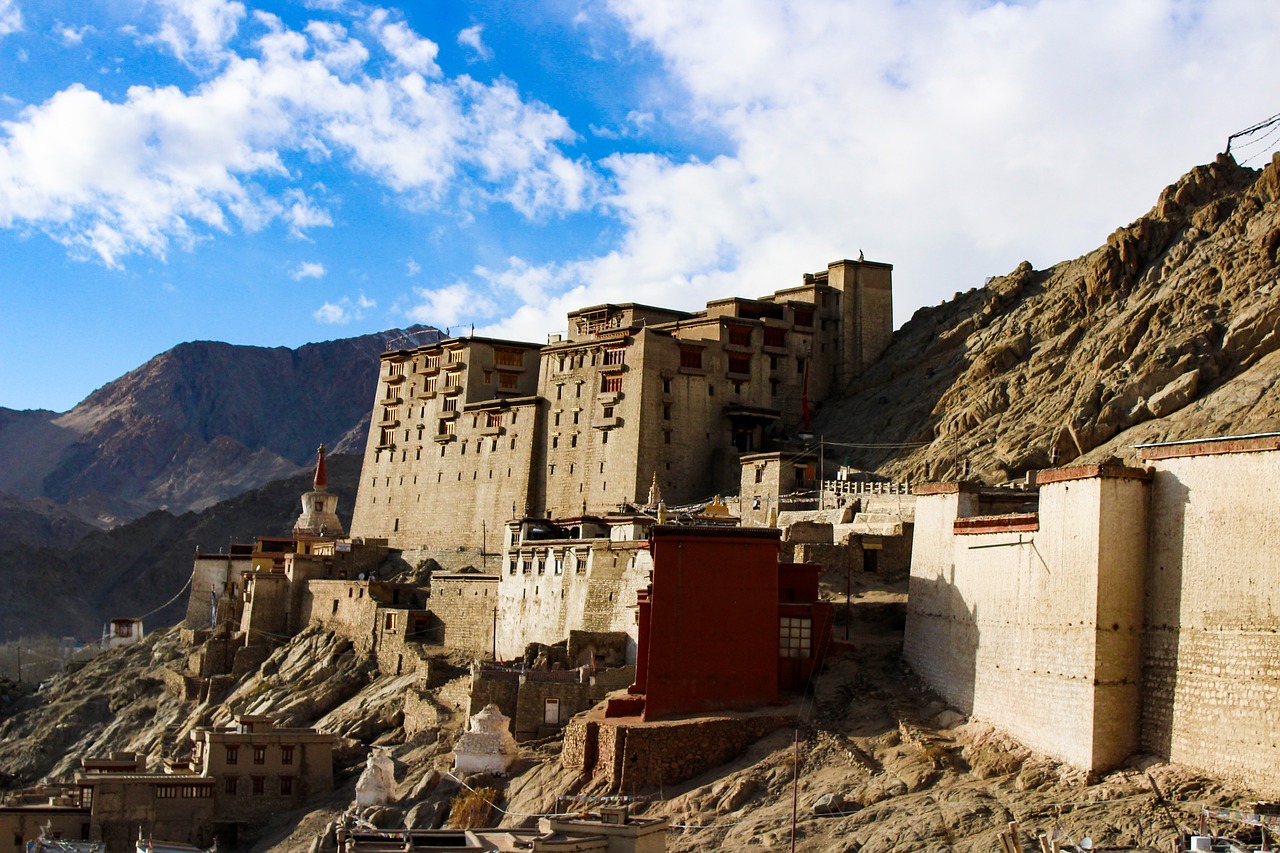
Ladakh is much admired for its rugged terrain, high passes, and deeply rooted religious practices. But its architectural structures are an example of subtler wonder that is concealed behind its monasteries and trekking routes. The architecture of this part of India is a living response to the environment, culture, and knowledge that have accumulated over the ages and are much more than mud and stones. From villages to the periphery of Leh, domestic architecture in this part of India represents a sustainable living practised in response to height and scarcity and values.
The Roots of Ladakhi Architectural Wisdom
Ladakh architecture has been greatly influenced by the region’s harsh climate, which is marked by extremely cold winters and short summers. Conventional dwellings were never made purely for aesthetic reasons. Rather, they emphasised warmth, robustness, and effective utilisation of regional resources. The fundamental components like stone, sun-dried mud bricks, wood, and clay ensure that homes mix in well with the surrounding landscape.
Another thoughtful aspect is how homes are oriented. To maximise daylight, most houses are orientated southward. Narrow windows lessen heat loss, and thick walls aid in heat retention. Even by today’s standards, Ladakh’s architecture is exceptionally energy-efficient due to its sensitivity to climatic change.
Also Read: Exploring the Old Town of Leh: History, Culture, and Local Highlights
Layout and Design of Traditional Homes
Traditional houses in Ladakh are designed in a way that is both practical and symbolic. The majority of houses have several stories. Livestock are frequently kept on the bottom floor, which contributes to wintertime warmth. The living quarters are situated above, and the design includes prayer places and storage rooms.
The architecture of Ladakh homes is characterised by flat roofs. These roofs can be used for social gatherings in the warmer months, storing fuel, and drying crops. Fluttering prayer flags on rooftops are a reflection of the spiritual thread that permeates everyday existence.
Materials That Speak of Sustainability
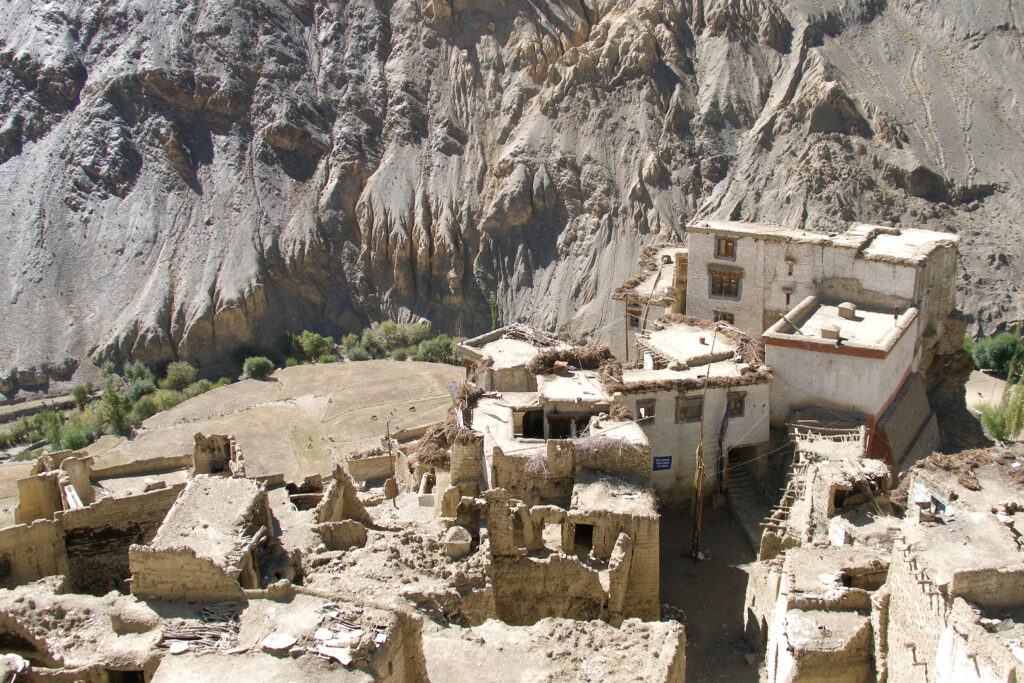
The foundation of the Ladakhi architecture is made of local resources. While mud bricks provide better insulation, stone foundations are more resilient to seismic action. Each wooden beam is precious and durable since timber is utilised sparingly due to its scarcity.
Homes are guaranteed to be ecologically friendly and biodegradable when natural materials are used. Ladakhi architecture practised sustainability naturally, leaving little ecological damage, long before it became a global concern.
Cultural Expression Through Architecture
Homes are cultural places in addition to being climate-adaptive. Whitewashing interior walls reflects light and creates a cosy atmosphere. Family shrines are kept in prayer rooms, and wooden pillars may have delicate decorations. By adding these touches, homes become more than just places to live.
Strong communal ties are shown in village clusters. In order to provide wind protection and encourage communal living, homes are constructed closely together. The cooperative and resilient social ideals are reflected in the communal nature of traditional houses in Ladakh.
Architecture and the Traveller’s Experience
Travellers’ experiences are enhanced when they comprehend the local architecture. Whether one is preparing for a Leh trek or touring monasteries, looking at village dwellings shows how people manage harsh terrain. Here, architecture is not static; rather, it changes while keeping its core characteristics.
In Ladakh, adventurers driven to climb frequently travel through isolated communities where homes that date back hundreds of years continue to stand strong in the face of freezing temperatures. These buildings subtly tell tales of perseverance that have a profound emotional impact on people who travel the same path.
Also Read: 27 Famous Buddhist Monasteries in Ladakh for a Spiritual Journey
Traditional Architecture in a Changing Ladakh
Ladakh is progressively gaining access to contemporary building materials and methods. Concrete is convenient, but it often disrupts thermal equilibrium. In order to preserve the essence of Ladakh house architecture while allowing for modern lifestyles, many people today work to blend modern requirements with traditional wisdom.
Additionally, responsible travel has been important. Homestays constructed in traditional designs are becoming more and more popular among tourists because of their comfort and genuineness. In a world that is changing quickly, Ladakh’s traditional homes are kept relevant by this increased appreciation.
Architecture as a Reflection of Landscape
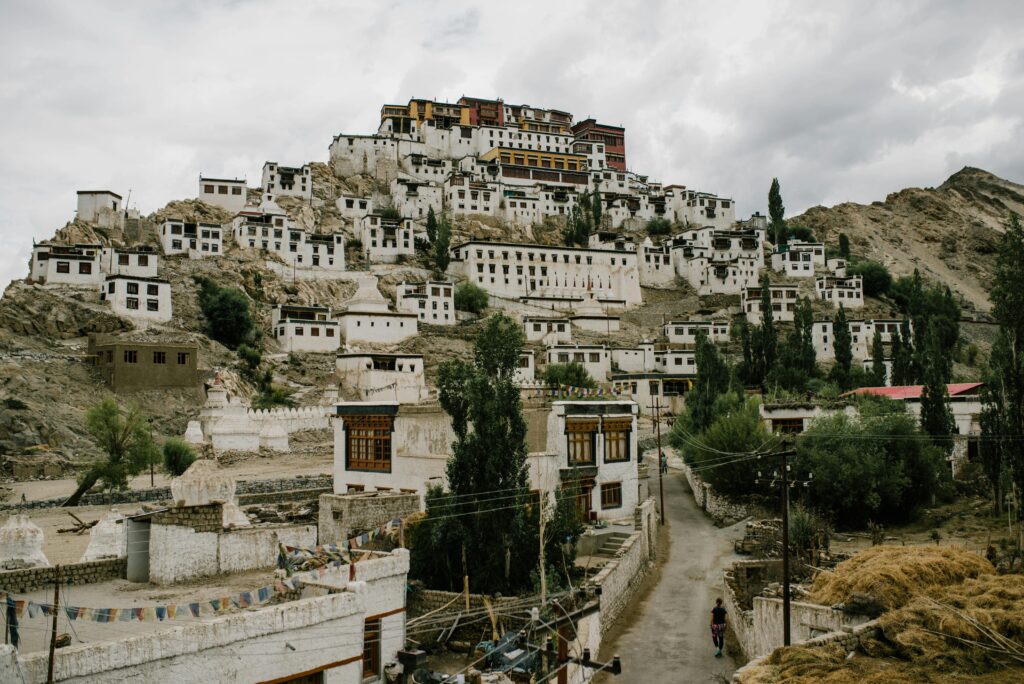
Ladakhi dwellings’ subdued hues create visual harmony with the nearby mountains. Here, settlements appear to sprout organically from the ground, in contrast to urban skylines. Ladakh architecture is renowned for its seamless integration, in which buildings merge with nature rather than taking centre stage.
Hikers travelling through Leh often witness how homes appear out of nowhere in large, barren places, offering security and warmth. These examples show how the architecture of Ladakh fosters both survival and hospitality.
A Word From Dream Land
At Dream Land, we’ve witnessed the strong bond that tourists have with local homes. Many come with an interest in monasteries or mountaineering in Ladakh, but they are enthralled by the architecture and village life. At Dream Land, we frequently create experiences that let visitors stay in or see traditional homes, giving them a deeper understanding of Ladakhi architecture than just pictures. It is always satisfying to see tourists have butter tea in sun-heated mud homes and recognise the genius of these ideas. It emphasises how important it is to preserve this legacy for everyone who traverses these valleys, not just the natives.
Conclusion
Ladakhi homes are ageless because of their sustainability, cultural richness, and simplicity. They provide insights that modern architecture frequently ignores and are rooted in community living and climate sensitivity. Protecting the wisdom ingrained in Ladakhi architecture becomes crucial as Ladakh develops further. These houses are more than just buildings; they are living examples of how people can coexist peacefully with one of the most difficult environments on earth.
FAQs
What is the architecture of Ladakh?
Ladakhi architecture is designed to withstand harsh mountain climates and is known for its mud-brick houses, flat roofs, monasteries, and sustainable construction techniques.
What is geometry in Ladakhi architecture?
Geometry in Ladakhi architecture is reflected in the use of symmetrical layouts, rectangular structures, courtyards, and carefully planned spaces that maximize sunlight and insulation.
What are the 7 different types of architecture?
The seven common types of architecture include residential, commercial, industrial, landscape, interior, urban design, and religious architecture.
What are the famous buildings in Ladakh?
Some of the most famous buildings in Ladakh include Leh Palace, Thiksey Monastery, Hemis Monastery, Alchi Monastery, and Lamayuru Monastery.
What historical influences shape the architecture of Ladakh?
Ladakh’s architecture has been influenced by Tibetan, Buddhist, Central Asian, and Himalayan traditions, creating a unique blend of cultural and religious design elements.
What materials are commonly used in Ladakhi architecture?
Traditional Ladakhi buildings are mainly constructed using mud bricks, stone, wood, clay, and locally available natural materials that provide insulation against extreme weather.
How does Buddhist influence manifest in Ladakh’s architecture?
Buddhist influence can be seen in monasteries, prayer halls, stupas, colorful murals, prayer wheels, and symbolic architectural designs that reflect spiritual beliefs and traditions.
Check Out Our Most Popular Treks – Markha Valley Trek | Phyang to Hunder Trek (Nubra Valley) | Spituk to Matho Trek | Rumbak valley Trek | Lamayuru to Hemis Monastry Trek | Lamayuru to Darcha Trek | Rumtse to Tsomoriri Trek | Hemis to Tsomoriri Trek | Padum To Lamayuru Trek | Kibber Tsomoriri & Rumtse Trek | Jhunglam Trekking